
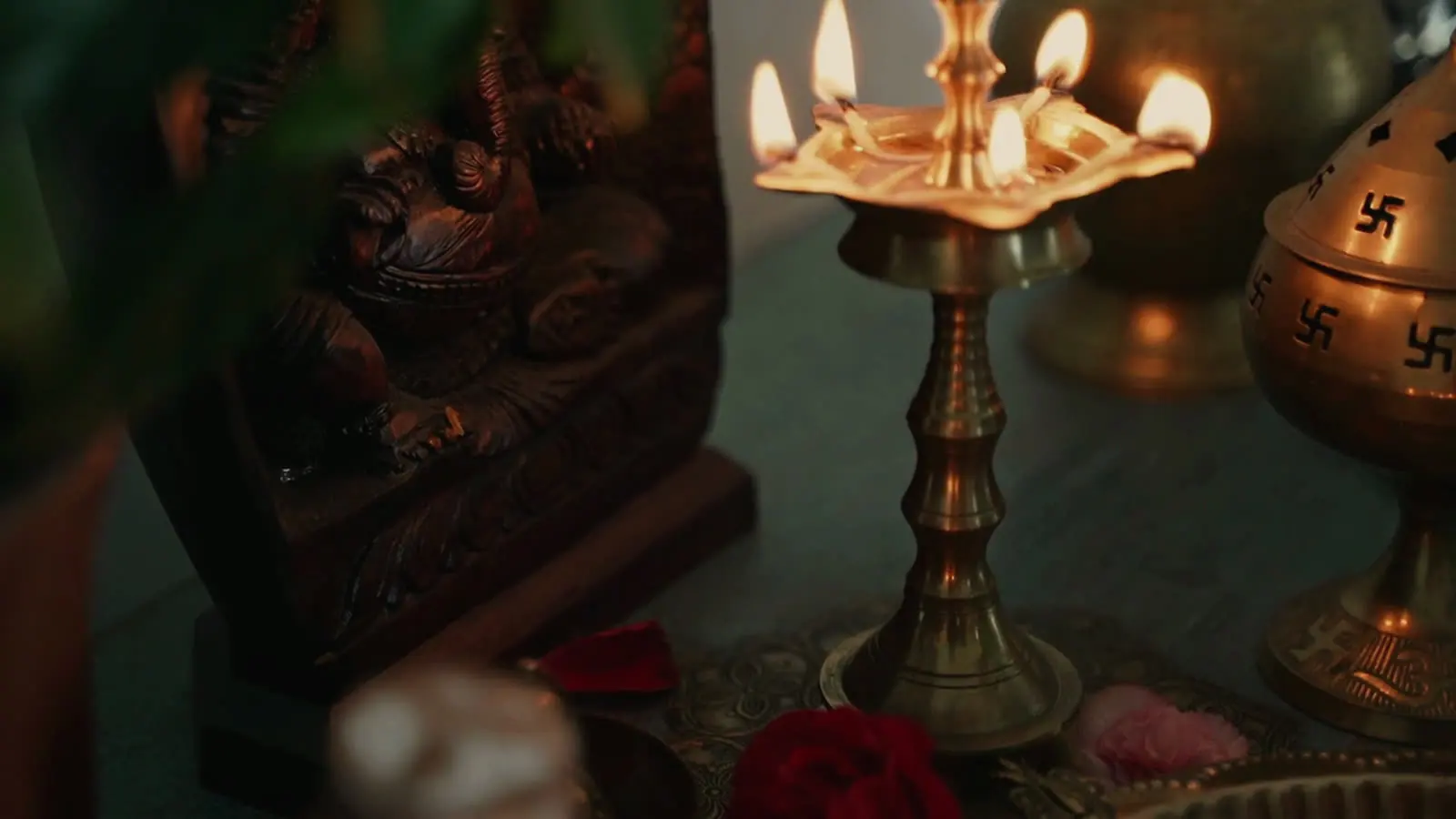
The prayer room is often the smallest room in the house and the one the family uses every single day. The evening lamp gets lit there, so it deserves as much thought as the living room.
Room or corner?
If you have the space, a separate room gives quiet and privacy. In apartments, a corner unit with doors works well. It can close when guests are over and open for the evening prayer.
Direction
Many families prefer the deity to face east or west, with the person praying facing east. Talk to your family elders or astrologer early, because the direction decides where the unit goes and where the door opens.
The lamp comes first
Plan for the nilavilakku before anything else. It needs a stable base, at least 45 cm of clear space above the flame so the shelf doesn't scorch, and a surface that's easy to wipe. A 5-wick nilavilakku also needs room on every side. Brass looks right next to wood and stone, and it ages well.
Keep a little air movement in the room. A jali panel or a small vent helps the smoke from the lamp and incense clear.
Materials
Teak and rosewood are traditional and warm. Marble or granite on the base is practical because oil and ash wipe off it. Back panels with carved jali or a soft backlight give depth without making the space busy.
Storage
Drawers for lamp wicks, oil, camphor, incense and prayer books keep the top clear. A small bell hook and a place for flowers are worth planning in from day one.
Lighting
Warm light only. A concealed strip above the deity and a soft downlight are enough; the lamp does the rest.
Want a prayer room planned around how your family prays? Book a free consultation with Ceaser Interio.